
Quick answer
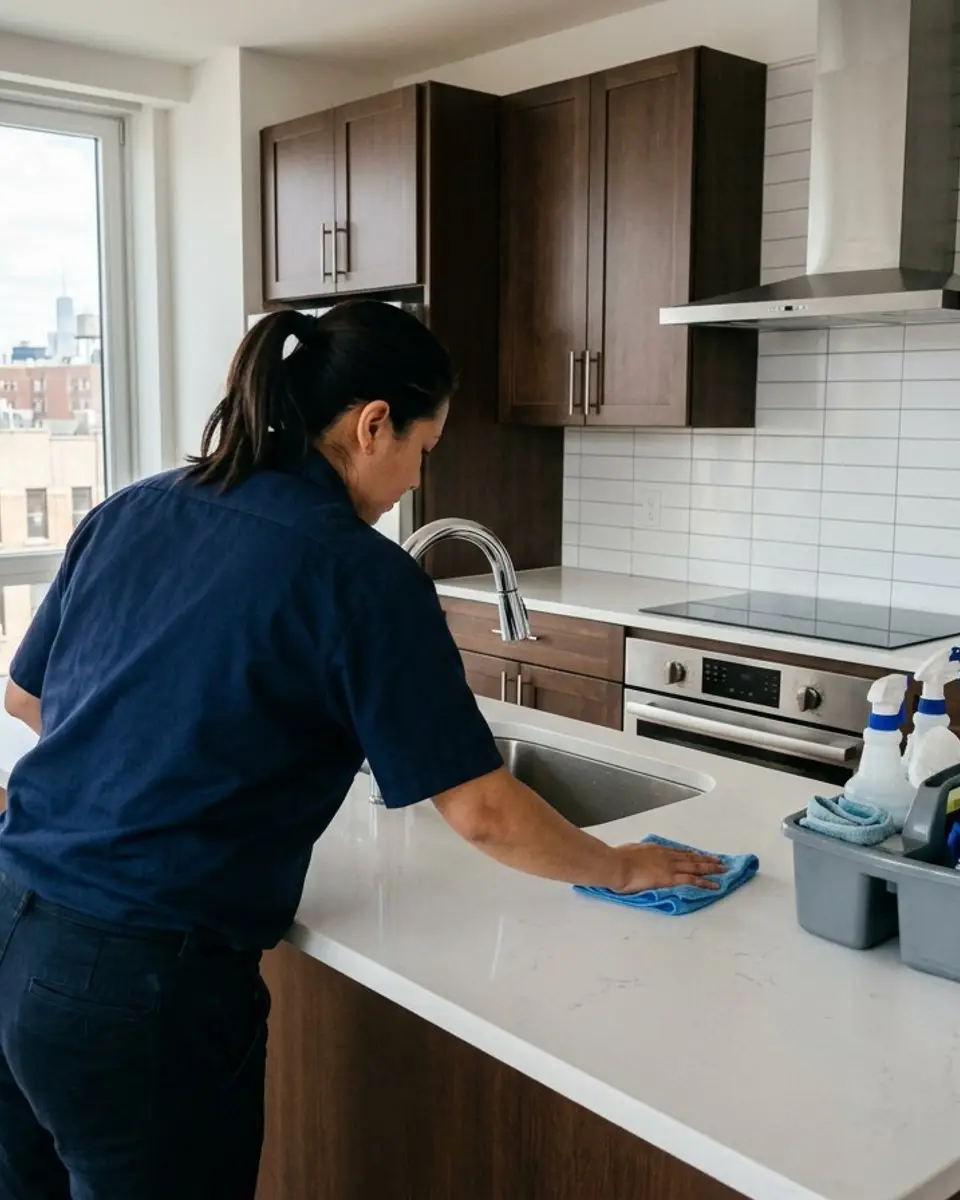
Apartment cleaning between tenants, often called turnover cleaning, is a top-to-bottom clean of a vacant unit so it is ready to show and lease. It goes well past routine cleaning: inside the oven, fridge, and freezer, inside every cabinet and drawer, tile and grout, baseboards, interior windows and sills, light fixtures, and closets. It should happen last, after debris removal, repairs, and painting, so the unit is cleaned once and stays clean for showings and move-in.
On this page
Empire Turnover is a New York City property turnover company that helps landlords and property managers prepare apartments and commercial spaces between tenants. Cleaning is the step every vacant unit needs, and it is also the step most often done too early or too lightly.
This guide covers what a turnover clean should include, room by room, and how to fit it into the rest of the apartment make-ready so the work holds up until the next tenant gets the keys.
How is turnover cleaning different from regular cleaning?
Regular cleaning maintains a lived-in space by working on visible surfaces. Turnover cleaning resets an empty unit, so it reaches inside appliances, cabinets, closets, and fixtures, and deals with buildup a previous tenant left behind.
Because the unit is empty, a turnover clean can reach places that furniture and belongings normally block: behind where the bed stood, the floor under the fridge door swing, the backs of closet shelves. It is also judged differently. The standard is not "tidy" but "ready for a stranger to open every door and drawer during a showing."
| Regular cleaning | Turnover cleaning | |
|---|---|---|
| Unit status | Occupied, furnished | Vacant, empty |
| Goal | Keep a lived-in home clean | Reset the unit for a new tenant |
| Appliances | Exteriors and stovetop | Inside the oven, fridge, freezer, and dishwasher where present, plus the range hood filter |
| Cabinets and drawers | Fronts and handles | Inside and out, shelves and drawer bottoms |
| Bathrooms | Surface wipe-down | Tile and grout, tub, toilet base, exhaust fan cover |
| Detail areas | Usually skipped | Baseboards, door frames, sills, light covers, closets |
| Timing | Recurring schedule | Once, after paint and repairs, before showings |
The glossary entry for turnover cleaning has a short definition you can share with a leasing team or a new vendor.
When should cleaning happen in a turnover?
Clean last. Debris removal, repairs, patching, and painting all create dust and debris, so the final clean should follow them and happen once.
A clean done before a painter sands patches or a handyman swaps a vanity faucet will need to be redone. In a prewar building, sanding plaster patches produces fine dust that settles on every sill, radiator, and floor in the room. The sequence Empire Turnover follows on a typical apartment turnover is:
Step 1: Debris removal
Clear items and trash left by the previous occupant so the crew can see and reach every surface.
Step 2: Repairs
Hardware, outlet and switch covers, door and cabinet adjustments, caulking, and other basic items in the approved scope.
Step 3: Patch and paint
Fill nail holes and dings, prime, and paint. See the guide to painting between tenants.
Step 4: Final turnover clean
Top-to-bottom clean once the dust-making work is finished.
Step 5: Final check and photos
A walkthrough against the approved scope, with before-and-after photos sent to the owner or manager.
Kitchen
The kitchen is where prospective tenants look hardest, and in a small NYC galley kitchen every surface is close to eye level. Grease builds up on the range hood, the cabinet tops near the stove, and the wall behind the range.
Kitchen surfaces
Appliances
Cleaning appliances is different from fixing them. If the oven does not heat or the fridge does not hold temperature, that is an appliance repair or replacement question for a separate technician, not part of a clean.
Cabinets and drawers
Bathrooms
Older NYC bathrooms often have small-format tile and wide grout lines, which hold soap scum and discoloration. A turnover clean should get the grout as clean as it will reasonably come. If grout is cracked or caulk is failing, that is a repair item to handle before the clean, not something cleaning can hide.
Bathroom checklist
Living areas, bedrooms, floors, and details
Floors and trim
Windows, fixtures, and closets
Debris and final inspection
Debris removal comes first in the sequence, but the clean should end with a last sweep for anything left behind: hangers in closets, items under the sink, takeout menus in a drawer. In a walk-up, haul-out takes longer because everything goes down the stairs by hand; in an elevator building, the managing agent may require the service elevator to be reserved.
The final inspection is a walkthrough against the approved scope, not a general impression. Open every cabinet, drawer, appliance, and closet. Check sills and baseboards in natural light. Our move-out inspection checklist is useful on the front end, and the same structure works for the final walkthrough.
Final cleaning check
What affects the scope of a turnover clean?
Unit size, how long the last tenant lived there, the condition of the kitchen and bath, and how much debris was left behind. Building access rules also matter.
A lightly used unit after a short tenancy is usually much quicker than one where the last tenant stayed several years and the oven has never been cleaned. Timing for any job depends on availability, access, and project scope. For more on what drives cost, see how much an apartment turnover costs. To have a vacant unit cleaned as part of a full make-ready, see our deep cleaning service.
Related Empire Turnover services

Written by Empire Turnover
Empire Turnover is a New York City property turnover company that helps landlords and property managers prepare apartments and commercial spaces between tenants. We serve Manhattan and Brooklyn. How we write and update these guides