
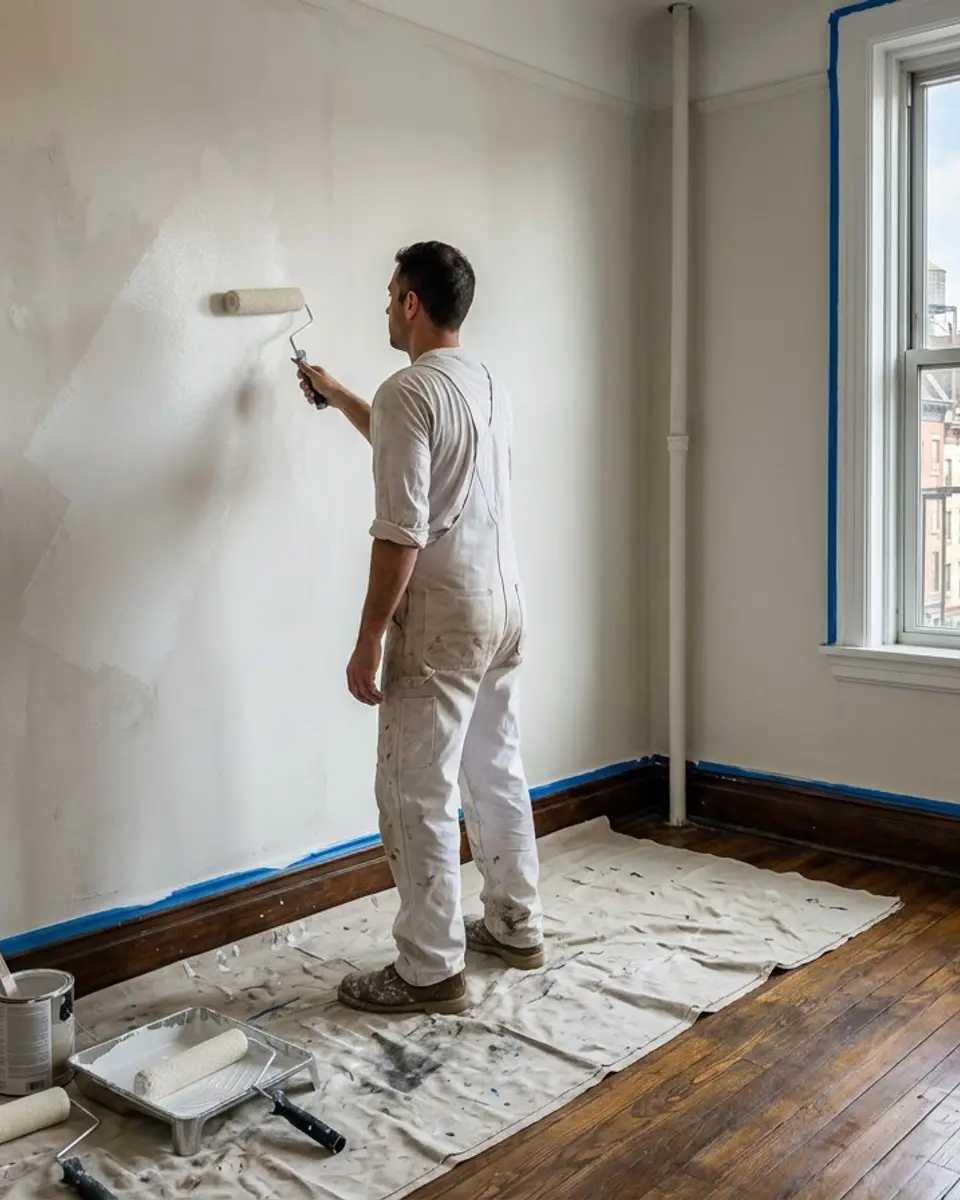
Quick answer
Most NYC apartments need at least some painting between tenants. Short, light tenancies can often get by with patching and touch-ups, while longer tenancies, scuffed or stained walls, or mismatched old touch-ups usually call for repainting full rooms or the whole unit. Patch and prime first, paint before the final clean, and keep a record of each building's paint colors and sheens. In older buildings, check lead-based paint obligations before any work that disturbs paint.
On this page
This guide is general information for NYC landlords, not legal advice. Lead-based paint requirements change and depend on the building, its age, and who lives there; confirm your obligations with HPD, your attorney, or your managing agent, and use appropriately certified professionals for any regulated work.
Empire Turnover is a New York City property turnover company that helps landlords and property managers prepare apartments and commercial spaces between tenants. Painting is often the largest single item in a make-ready, and the decisions made here (touch up or repaint, which colors, which sheen) shape both the result and how long the unit sits empty.
This guide covers the practical side of painting between tenants and the regulatory questions owners of older buildings should check before work starts.
When does an apartment need repainting between tenants?
Repaint when touch-ups will not blend, when walls are broadly scuffed, stained, or faded, or when the last tenant changed colors. A short tenancy with a few nail holes may only need patching and touch-ups.
Owners usually see it at the move-out inspection. Walk the unit in daylight and look at walls at an angle, not straight on: scuffs, roller marks, and patchy old touch-ups show up much more clearly that way. Signs a room needs more than touch-ups include:
- Scuffing along hallways, behind doors, and where furniture sat against the wall
- Grease or cooking film on kitchen walls and ceilings
- Smoke or nicotine staining
- Water stains on ceilings or around windows (find and fix the source first)
- Accent walls or tenant-chosen colors that need to go back to the building standard
- Previous touch-ups that already show as patchy spots
Wall damage and patching
Patching comes before any paint. Common turnover damage includes nail and anchor holes from pictures and TV mounts, door handle dents, chipped corners, hairline cracks, and tape or adhesive damage where the last tenant hung things.
Drywall vs prewar plaster
Newer buildings and renovated units are mostly drywall, which patches predictably with joint compound. Many prewar walk-ups and brownstones still have plaster walls, which are harder and more brittle. Plaster can crack around old patches, and a soft compound patch on a hard plaster wall can show through paint if it is not feathered and primed well. Large cracks, bulging, or loose plaster are beyond a cosmetic patch and should be assessed separately.
Dry time and spot priming
Joint compound has to dry fully before sanding and priming, and deeper patches may need more than one coat. Dry time varies with depth, the product used, and the temperature and humidity in the unit, so a heated prewar apartment in winter behaves differently from a humid one in August. Spot priming the patches before paint keeps them from flashing (showing as dull or shiny spots) through the finish coat.
Touch-ups vs full repaint
Touch-ups are faster and use less paint, but they only work when the existing paint is in decent shape and the color and sheen are known. Otherwise the patched spots will show, especially on flat or eggshell walls in raking light from tall windows.
| Touch-ups | Full room or unit repaint | |
|---|---|---|
| Best for | Short tenancies, a few nail holes or scuffs | Long tenancies, broad wear, stains, color changes |
| Color | Must match the existing color exactly | Fresh start, back to the building standard |
| Sheen | Must match, or patches flash | Chosen per surface (walls, trim, kitchen, bath) |
| Risk | Visible patches if paint has aged or specs are unknown | More time and materials |
| Records needed | Brand, color, and sheen on file | Update the building record afterward |
Paint ages and fades, so even the right color can look slightly off on a wall painted years ago. A common middle ground is repainting a full wall or room corner to corner where touch-ups would be obvious, while touching up rooms that are in good shape.
Should you paint before or after cleaning?
Paint before the final clean. Patching, sanding, and painting create dust, drips, and tape residue, so the full clean should come after the paint is done.
The usual order on a make-ready is debris removal, repairs, patching, paint, then the final turnover clean. Debris goes first so painters can reach the walls, and repairs that might mark walls (swapping a light fixture, adjusting a door) happen before paint. Our guide to cleaning between tenants covers what the final clean should include.
Painting for turnover efficiency
Portfolio owners and property managers save time by standardizing. When every unit in a building uses the same wall, trim, and ceiling colors, touch-ups are straightforward and leftover paint from one unit can be used in the next. A neutral standard color also shows well in listing photos.
- Pick one wall color, one trim color, and one ceiling white per building or portfolio
- Use a more scrubbable sheen in kitchens and baths and on trim and doors
- Keep labeled leftover paint on site where storage allows
- Decide in advance which tenant-painted colors must be returned to standard
- Include closets and doors in the scope so they do not look tired next to fresh walls
Painting a full unit takes longer than touch-ups, and timing always depends on availability, access, and project scope. For more on how painting affects the schedule, see how long an apartment turnover takes.
Lead-based paint in older NYC buildings
According to NYC HPD guidance on lead-based paint (opens in a new tab), Local Law 1 of 2004 requires owners of covered buildings built before 1960 to presume that paint is lead-based unless it has been tested and an exemption has been granted. HPD lists covered buildings as including buildings with three or more units built before 1960, and buildings with three or more units built between 1960 and 1978 where the owner knows lead paint is present, among other categories.
The same HPD page says owners must address lead-based paint on doors and windows and make other required repairs when an apartment becomes vacant, and must certify that the required turnover work was done before the unit is occupied. HPD also states that this repair work must be performed by certified workers using safe work practices, and that records must be kept. The details depend on the building, so read the HPD pages for owners and confirm what applies to your property.
At the federal level, the EPA Renovation, Repair and Painting (RRP) program (opens in a new tab) applies to anyone paid to perform work that disturbs painted surfaces in homes, childcare facilities, and preschools built before 1978. EPA says these firms must be lead-safe certified and that landlords and property management companies must follow the rule when their work disturbs paint in rented pre-1978 homes.
Empire Turnover does not perform lead abatement, lead testing, or lead hazard correction. If your building or unit is covered by these rules, the work that disturbs paint needs to be handled by appropriately certified firms and workers, and we can discuss with you which parts of the turnover we can and cannot take on.
Scoping paint work with a turnover company
A clear paint scope avoids surprises. When you request a quote, it helps to share photos of each room, the building's standard colors if you have them, the year the building was built, and whether you want touch-ups, specific rooms repainted, or the full unit. Empire Turnover handles touch-ups, full room and full unit repaints when the scope calls for it, trim, doors, and closet interiors as part of a wider apartment turnover. See our painting service for details.
Sources
- NYC HPD: Lead-Based Paint (opens in a new tab)https://www.nyc.gov/site/hpd/services-and-information/lead-based-paint.page
- U.S. EPA: Renovation, Repair and Painting Program (opens in a new tab)https://www.epa.gov/lead/renovation-repair-and-painting-program
Related Empire Turnover services

Written by Empire Turnover
Empire Turnover is a New York City property turnover company that helps landlords and property managers prepare apartments and commercial spaces between tenants. We serve Manhattan and Brooklyn. How we write and update these guides